The framework

Your 7 ProAgeing Steps

Live longer. Live better. Live with purpose.

Healthy longevity is a journey and about making small, meaningful investments in your body, mind and relationships that add up over time. The ProAgeing Steps are time tested and proven to help you build a life that is not only longer, but healthier, more independent and more fulfilling.

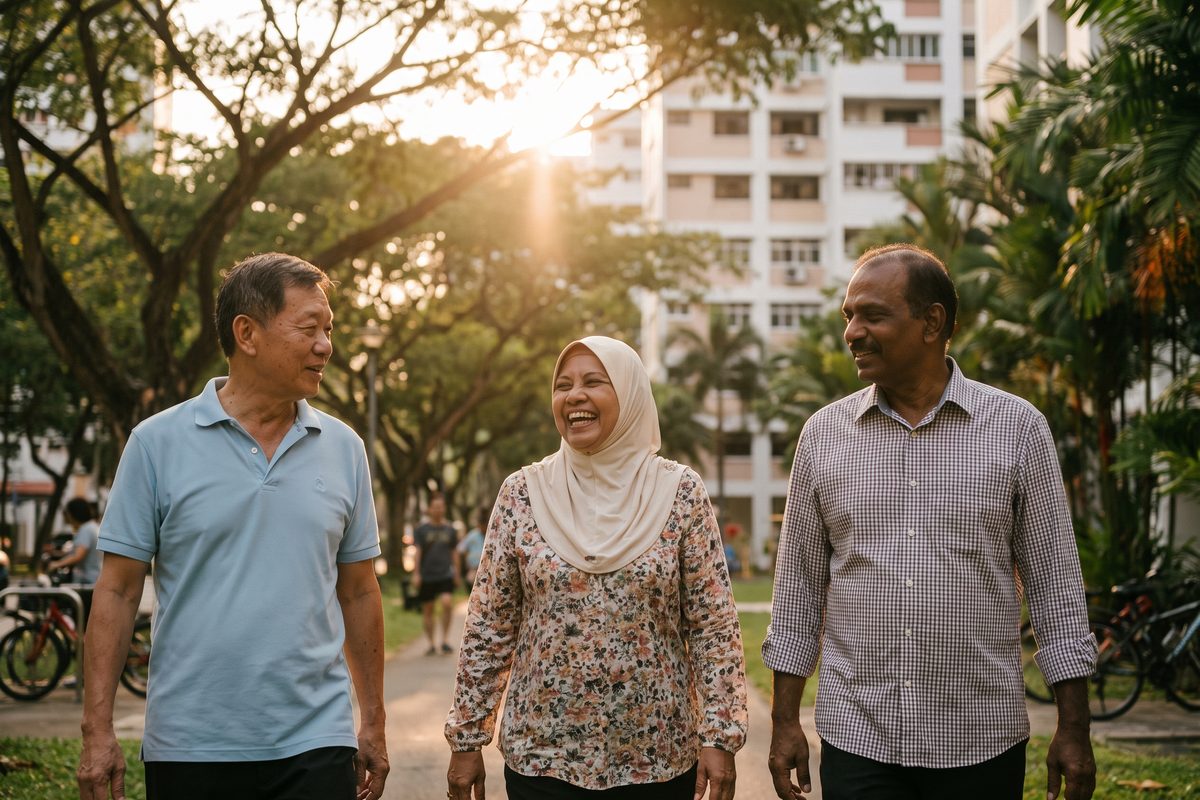
Three older Singaporeans walking together and laughing along a park connector beside HDB blocks at golden hour
1

Clarify Your Preferred Future

Know your why

Why it matters

Having a long life is a gift, but having longevity without purpose and meaning is something to be dreaded. People who have a clear vision of who they are and what their future could look like carry with them a sense of hope, and a promise that life can be fulfilling and deeply rewarding.

What the science shows

Research has linked a stronger sense of purpose with lower risk of cognitive decline, better mental health and even reduced risk of premature death. Purpose appears to influence health through motivation, resilience and healthier daily choices.

Ask yourself

  • What do I want my life to look like in 10 or 20 years?
  • What do I want to be able to do, not just avoid?
  • Who do I want to be there for?

Keep this vision visible. Healthy longevity becomes much easier when you are moving toward something meaningful, not merely away from disease.

Take the Sense of Purpose check →
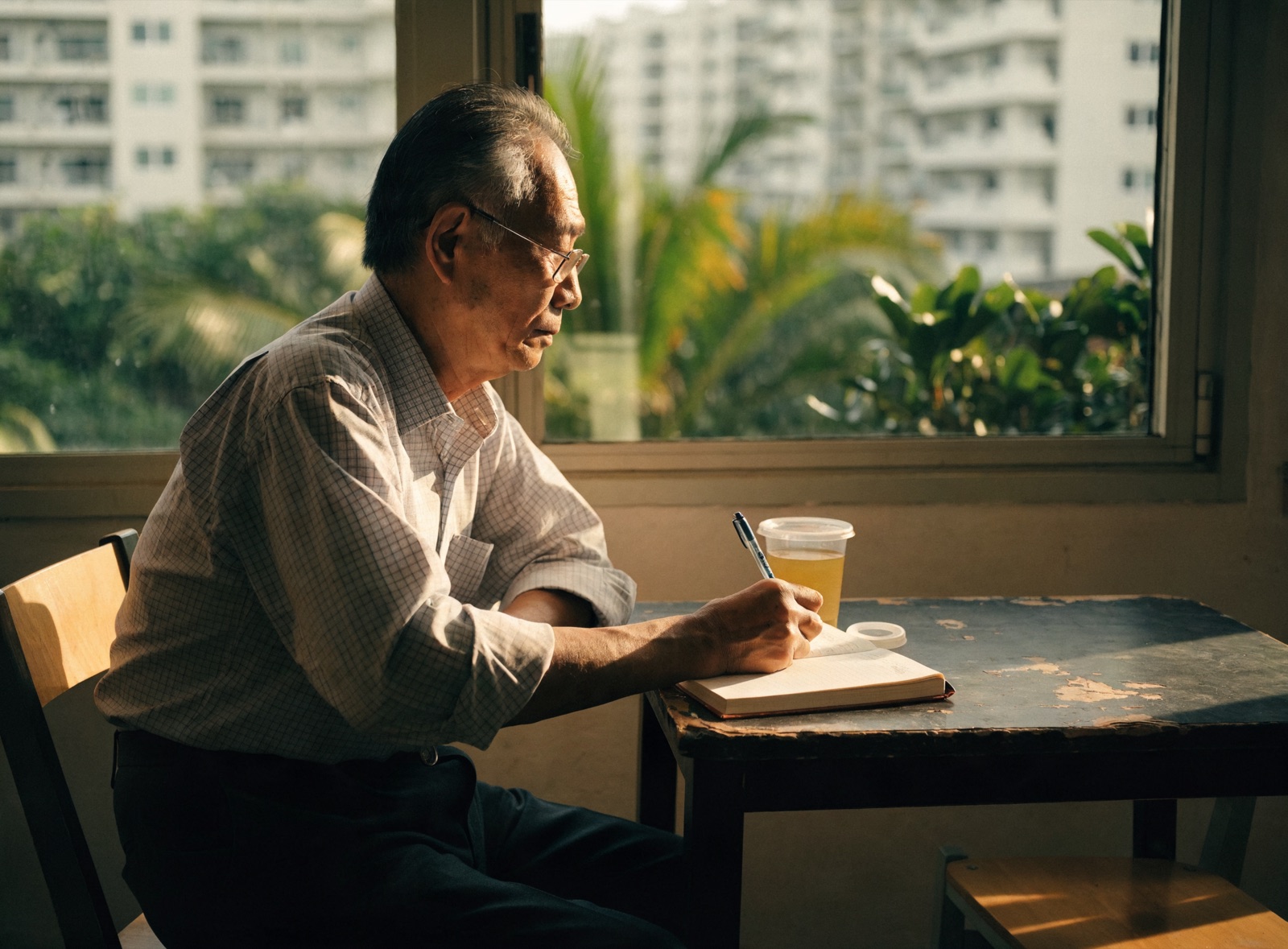
An older man sitting by a window in an HDB flat, writing thoughtfully in a notebook as he reflects on his preferred future
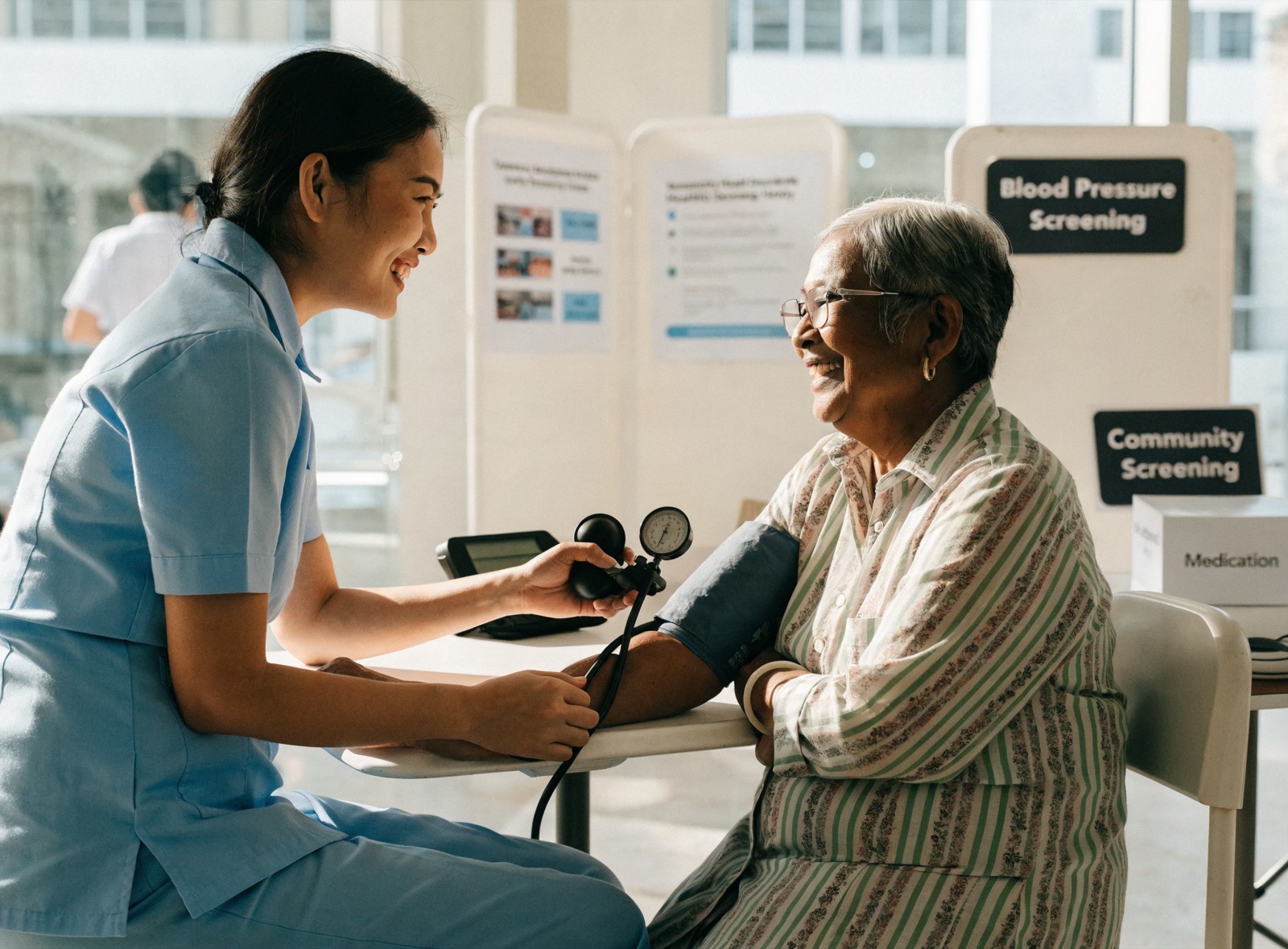
A nurse smiling with an older woman while checking her blood pressure at a community health screening in Singapore
2

Understand Your Personal Healthspan Risks

Your family history is not your fate

Why it matters

Healthspan is the number of years you live in good health. Many medical conditions associated with ageing — heart disease, diabetes, cancer and dementia — are largely preventable. Knowing which risks are genuinely yours is what lets you spend your effort where it will count.

What the science shows

Family history usually gets filed under things you cannot change. That is misleading. What runs in your family is not only genes — it is also the food you grew up on, the habits you learned without noticing, and the environment you shared. Much of that can still move.

What it does tell you is where to look, and when. For some conditions, having one first-degree relative — a parent, brother, sister or child — can double your own risk. Two things sharpen it further: several affected relatives on the same side of the family, and disease that appeared young. A parent who had a heart attack in their forties means something quite different from a grandparent who developed heart disease at eighty.

This is also the practical part. Family history is what tells a doctor which screening you need, when to start it, and how often to repeat it — often years earlier than standard advice. And people who know their family history are more likely to act on it.

Know what is actually yours

  • Which conditions appeared in your parents, brothers, sisters and children
  • The age each of them was diagnosed — not just the diagnosis
  • Which side of the family it came from
  • Your own blood pressure, and when it was last actually measured
  • Your waist measurement, which tracks metabolic risk better than weight alone

None of this is about bracing for bad news. A family history you have actually written down is one of the few things that changes what your doctor does next.

Take the Family History check → Take the Cognitive Decline check →
3

Invest in Daily Movement

Intensity Matters

Why it matters

Physical exercise is the one thing that will yield health benefits that will sustain your function and well-being throughout life. Your body was designed for movement throughout the day — and raising the intensity is what pushes your fitness and improves your health.

What the science shows

Brisk walking and other moderate intensity activities are associated with lowering the risk of the health conditions that plague our longevity — namely cardiovascular disease, diabetes, dementia, depression and cancer.

Move more, and move harder

  • Pick up the pace preferably to 90–100 steps per minute
  • Build towards 150 minutes of moderate intensity activity a week
  • Stand up every 30–60 minutes

Healthy longevity comes from doing both — keeping the body in motion every day, and lifting the intensity often enough to challenge your heart and lungs.

Take the VO2 Max check → Find your Training Zone →
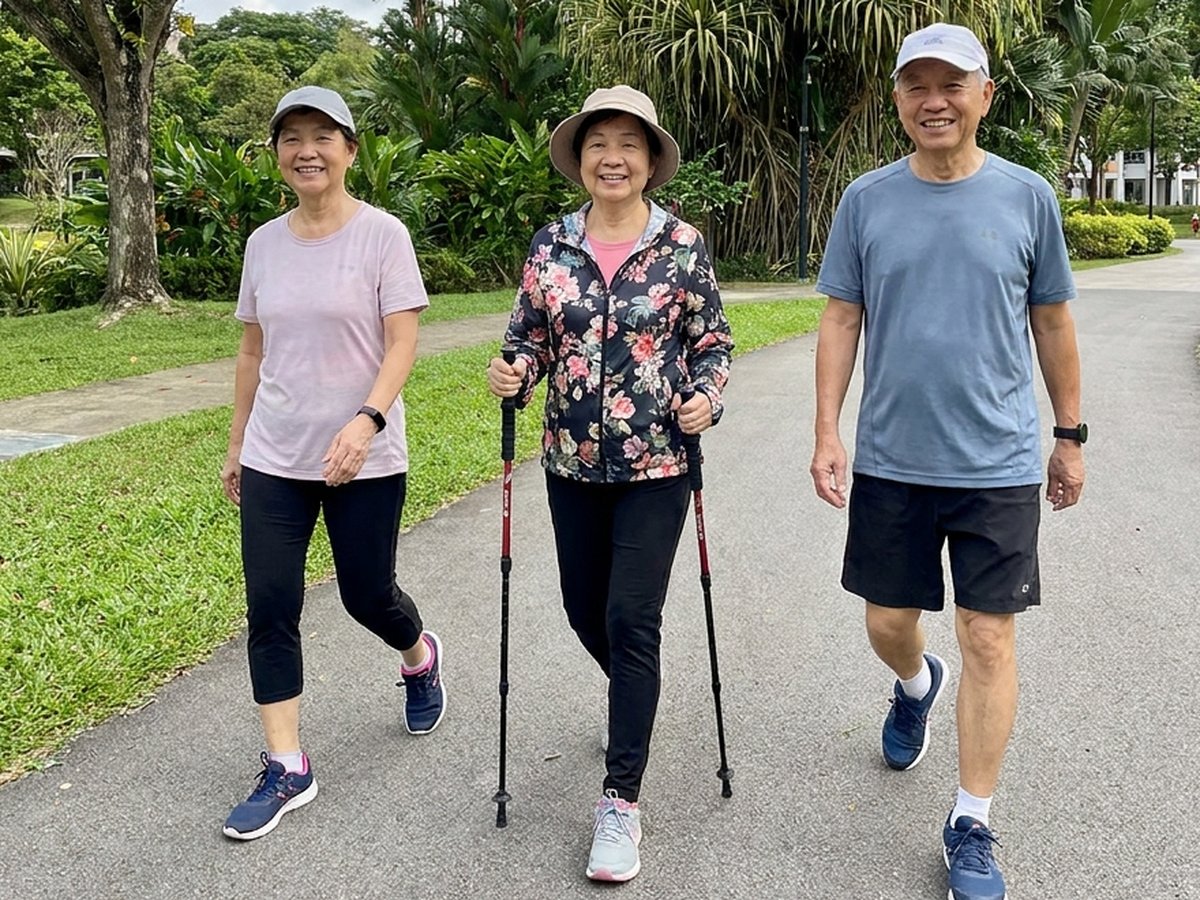
Three older adults walking together along a park connector in Singapore, one using trekking poles, HDB blocks in the background
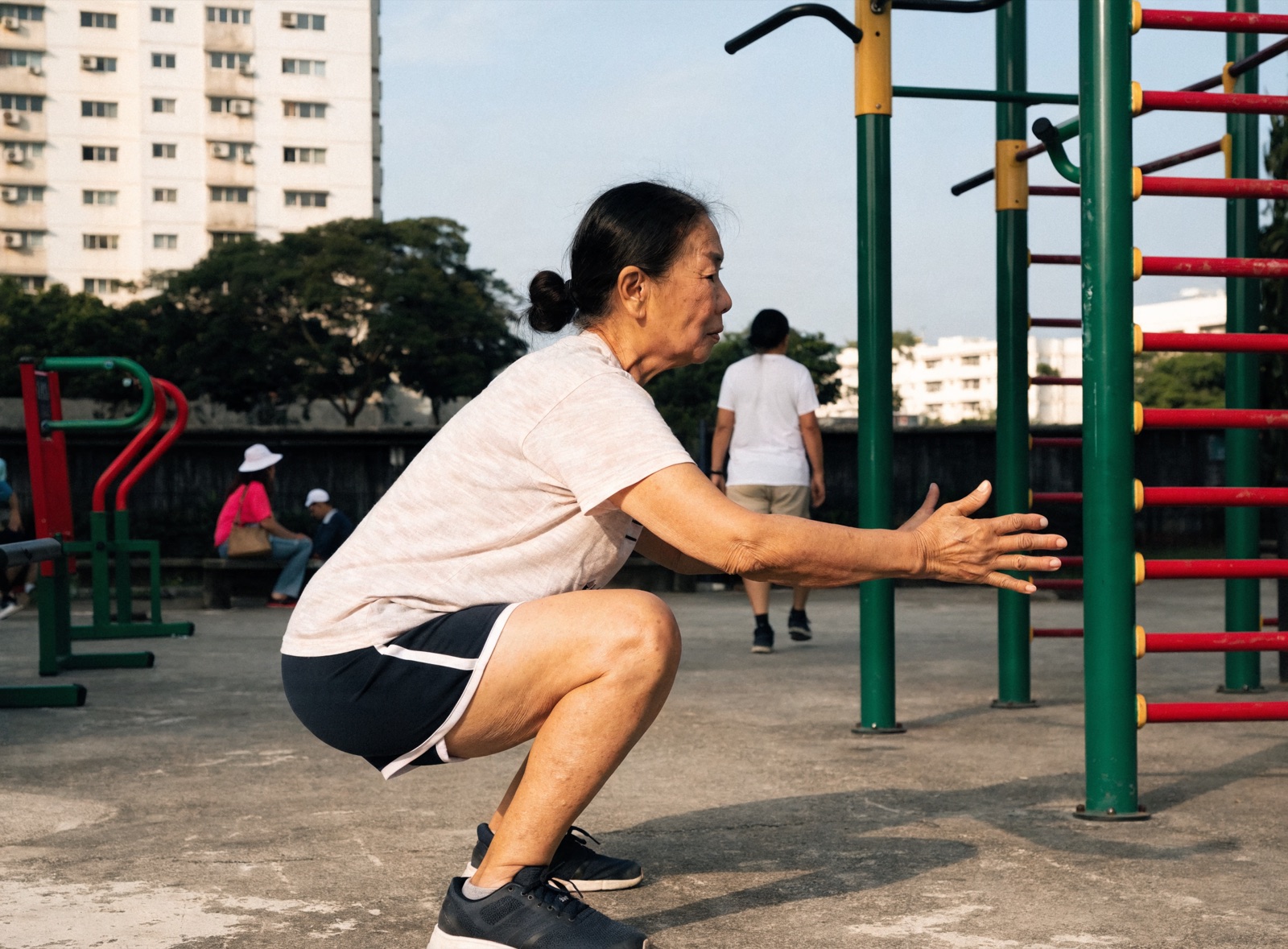
An older woman doing a bodyweight squat with good form at an outdoor fitness corner in Singapore
4

Build Strength and Balance Capacity

Protect your independence

Why it matters

We need strength and balance, without which we lose our mobility and are more likely to suffer injurious falls. They are the foundation of our independence: getting up from a chair, climbing the stairs, carrying groceries and staying socially connected.

What the science shows

By the age of 30 we start to lose 1–2% of muscle mass annually, and coupled with age-related muscle loss (sarcopenia), this decline accelerates further. Strength training can reverse this trajectory and, together with balance practice, improve mobility, reduce falls and help us keep doing what we love.

Focus on functional mobility

  • Resistance training involving major muscle groups
  • Focus on movements such as sit to stand, pulling and pushing
  • Do activities that intentionally challenge and require you to maintain your balance

Maintaining strength and balance is one of the most effective ways to preserve confidence, mobility and independence as we age.

Take the Sit-to-Stand check → Take the Balance check →
5

Fuel Your Body for the Long Haul

Eat for the decades ahead

Why it matters

Eating well is not about this month's weight or this year's blood test. It is about what your body has to work with over decades — the raw material for muscle you can still use at 80, a brain that stays sharp, and arteries that stay clear. Food is information for your body: it shapes energy, blood sugar, blood pressure, inflammation, muscle and brain function, meal after meal, for the rest of your life.

What the science shows

The world's most studied longevity diets — the Mediterranean pattern, the traditional Okinawan diet, and the DASH and MIND approaches — look different on the plate but agree on the shape: mostly plants, legumes and whole grains, healthy fats, enough protein, and very little ultra-processed food. Eating this way is consistently associated with lower cardiovascular risk, better metabolic and cognitive health, and more years lived in good health. It is the pattern that does the work, repeated over years.

Protein deserves particular attention as we age. Older bodies use protein less efficiently, so getting enough of it, spread across the day, is what protects the muscle you are building in Step 4.

Build a pattern you can keep

  • Mostly plants — vegetables, fruit, legumes and whole grains at most meals
  • Enough protein at every meal, not just at dinner
  • Healthy fats from olive oil, nuts, seeds and oily fish
  • Keep ultra-processed food occasional rather than daily
  • Drink enough water

A longevity diet is not a diet you go on. It is a way of eating you could still be doing in twenty years — which is exactly why it works.

Take the Nutrition & Protein check →
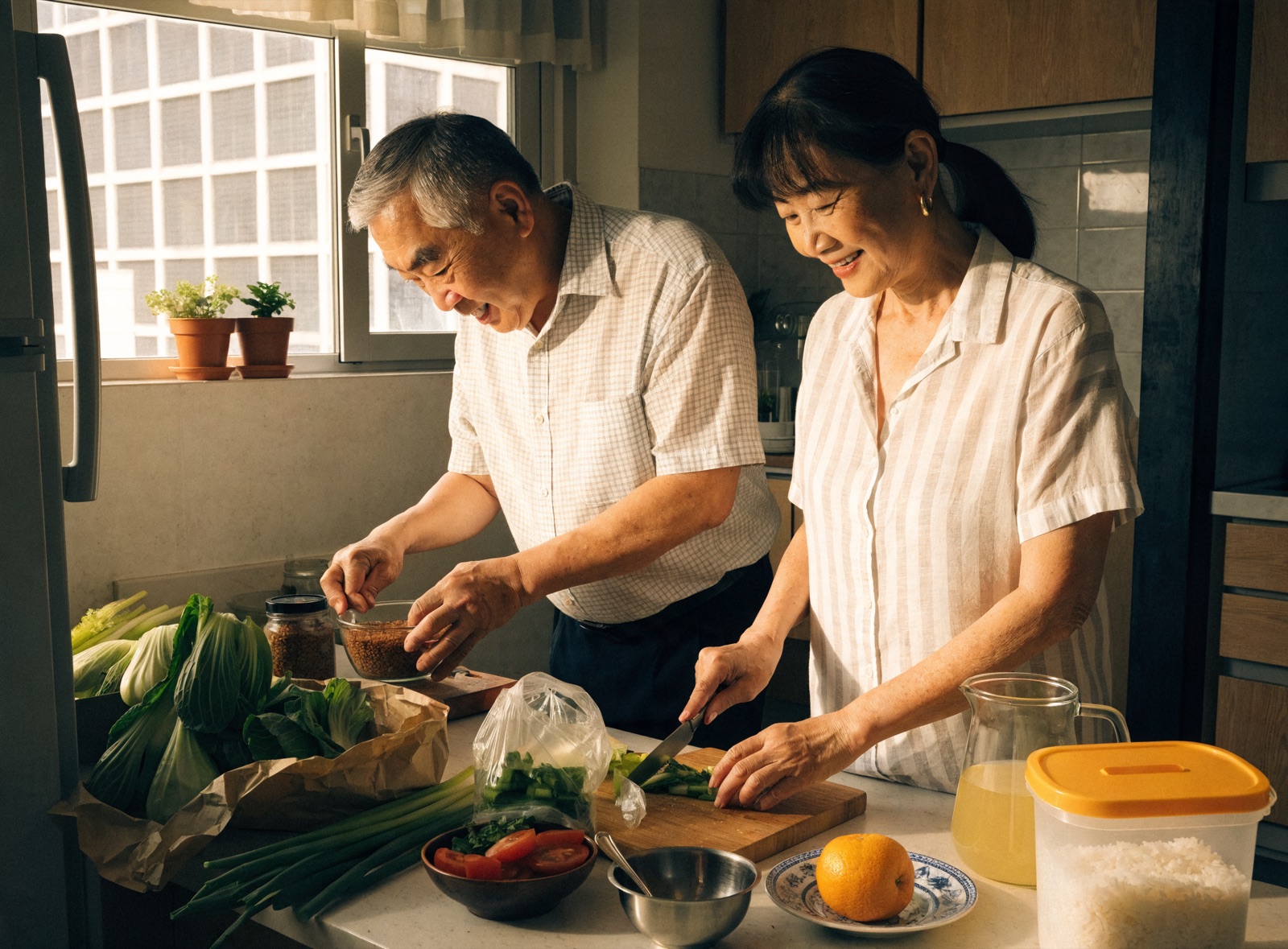
An older couple preparing a healthy meal together in their HDB kitchen, with fresh vegetables and fruit on the counter
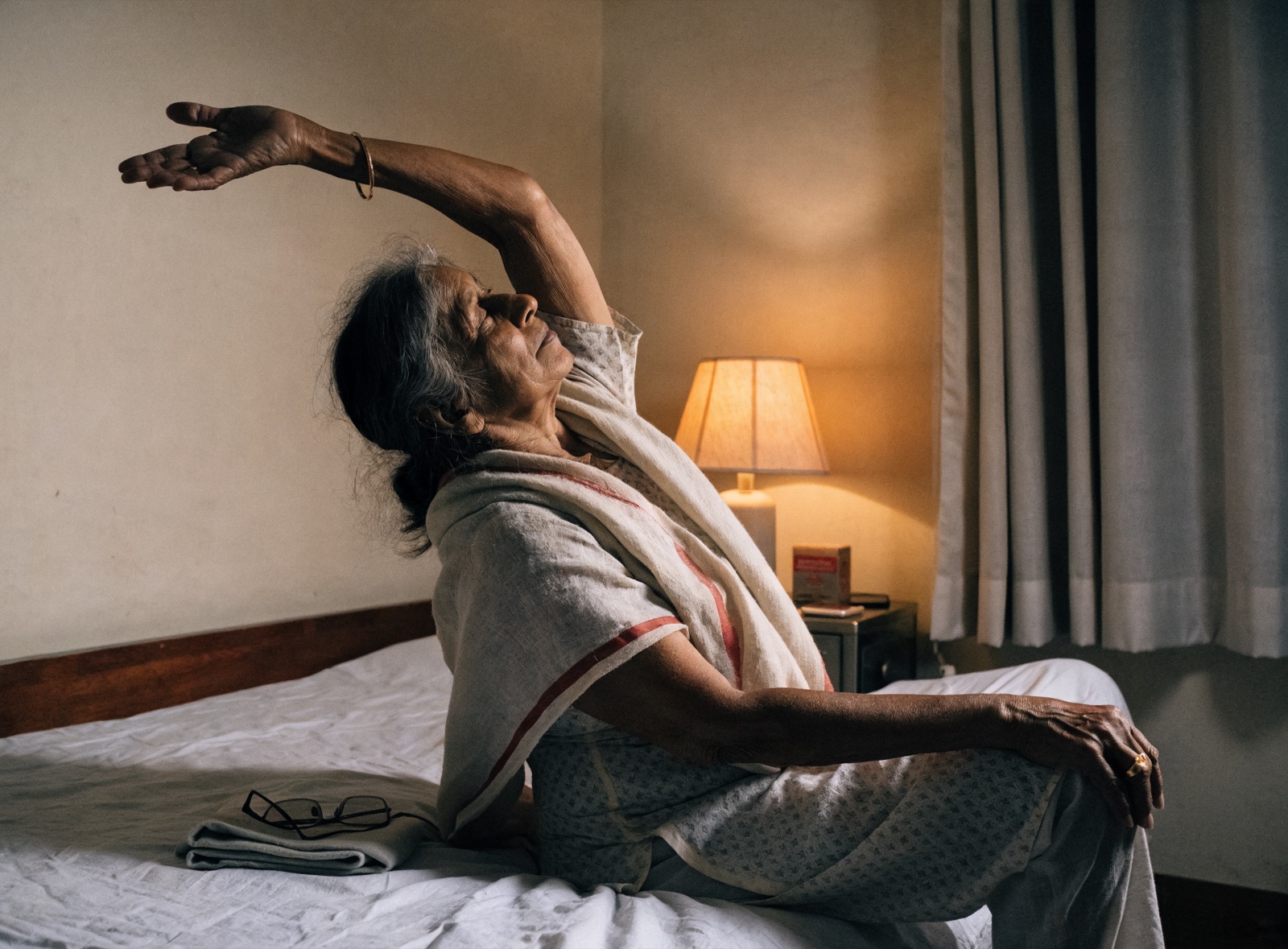
An older Indian woman doing a calming evening stretch on her bed, in a simply furnished bedroom with warm lamp light
6

Restore Sleep and Stress Rhythm

Repair is not optional

Why it matters

Training breaks tissue down. Food supplies the parts. Sleep is when the work actually gets done — muscle repaired, memory filed, the brain cleared of the day's waste. Stress, on the other hand, is helpful in short bursts, but chronic (long-term) stress that never switches off impairs the repair system.

What the science shows

Short and poor-quality sleep is consistently associated with higher risk of obesity, type 2 diabetes, high blood pressure, heart disease, depression and cognitive decline — and the relationship runs both ways, because poor health degrades sleep in turn. Chronic stress travels the same channels: sustained blood pressure, disrupted blood sugar control, weakened immunity.

Neither is a matter of willpower. Both respond to changing the conditions around them, which is most of what the list below is.

Protect the hours you are not doing anything

  • Same sleep and wake time, weekends included — regularity matters as much as total hours
  • Bright light in the first hour after waking, dim light in the last hour before bed
  • Keep caffeine to the first half of your day
  • Give yourself a wind-down — screens off, lights low, something dull
  • When stress spikes, breathe out for longer than you breathe in

You cannot train, eat or think your way out of chronic under-recovery. Everything else in these seven steps is built on the hours you spend doing nothing at all.

Take the Sleep Quality check →
7

Strengthen Social and Emotional Connections

Nobody ages well alone

Why it matters

Of all seven steps, this is the one people treat as a nice-to-have. It behaves like a clinical risk factor. Loneliness is not only an unhappy feeling — it registers in the body as a threat state, and a body that reads its surroundings as unsafe does not sleep, repair or eat well. It also compounds quietly: the fewer people around you, the fewer there are to notice when something is wrong.

What the science shows

Loneliness and social isolation are associated with higher risk of depression, cognitive decline, heart disease and premature death, at a scale that sits alongside more familiar risks like inactivity. The protective side is just as consistent: people with supportive relationships recover better, hold on to health behaviours longer and report better quality of life.

Contribution matters as much as company. Regular, structured volunteering — a fixed commitment to a group or an organisation — shows up particularly strongly in older adults, including here in Singapore.

Build connection on purpose

  • Put people in your calendar the way you put appointments there
  • Choose regular over spontaneous — the same group, the same evening
  • Share food; it does work that conversation alone does not
  • Volunteer with a fixed commitment rather than whenever you are free
  • Ask for help when you need it — being helped is half of a relationship
  • Notice who has gone quiet, and call them

Living longer on your own was never the goal. The point of the other six steps is to still be there — able, present, and worth calling.

Take the Connection check →
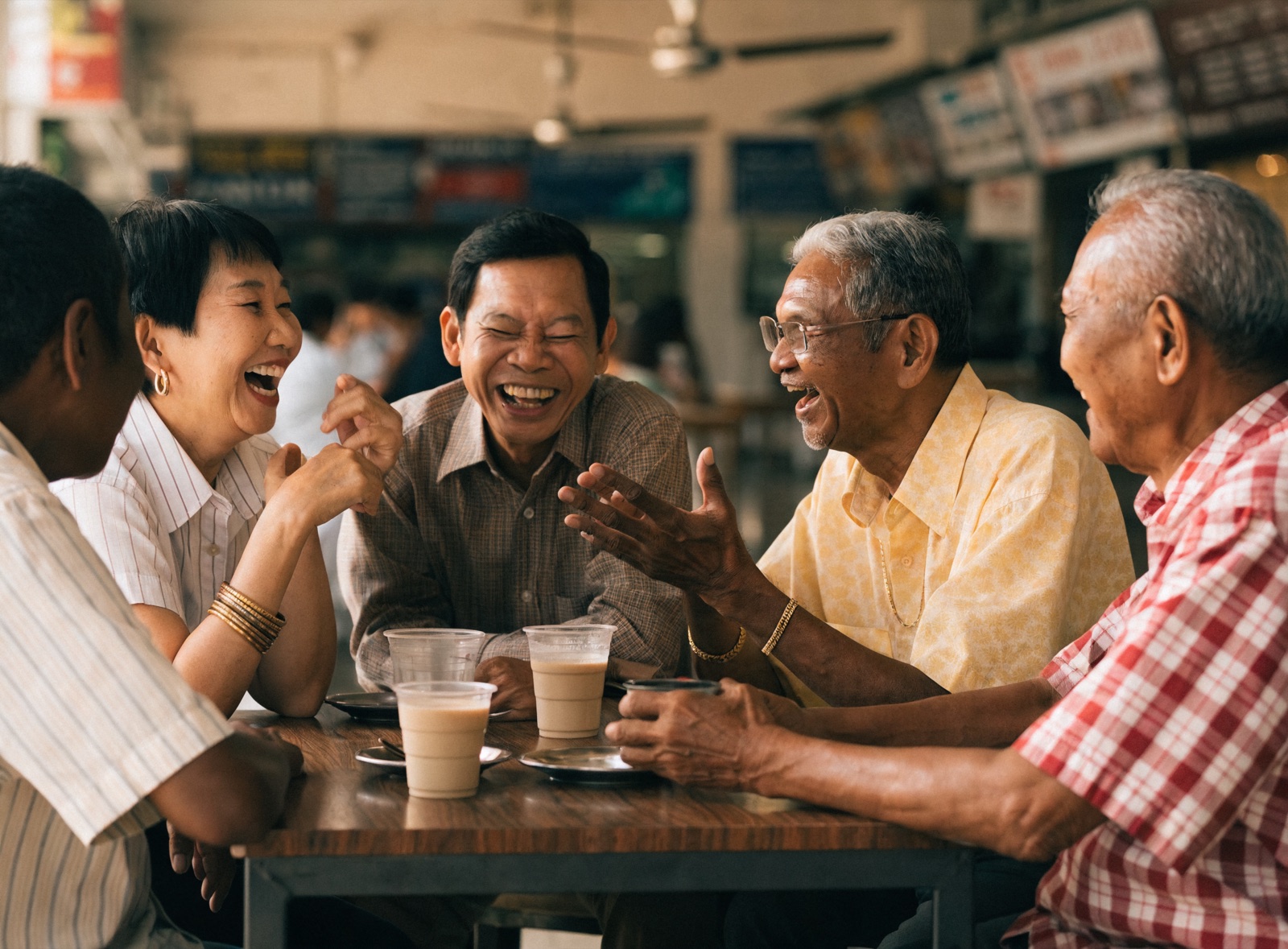
A group of older friends laughing together over kopi at a hawker centre table in Singapore

Ready to make it stick?

The 21-Day ProAgeing Challenge turns your results into a daily plan — one check, one small action, every day for three weeks.

Start the 21-Day Challenge